 5m
5mTariff pause ‘does not end the uncertainty’, says financial expert
 Krishnan Guru-Murthy
Presenter
Krishnan Guru-Murthy
Presenter
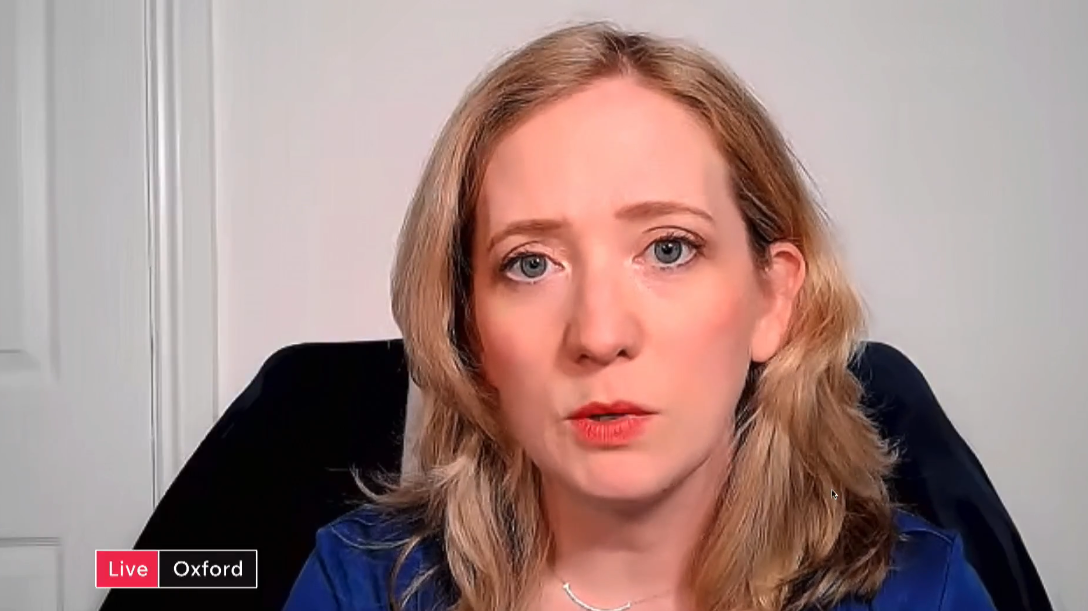
We spoke to Helen Thomas, former advisor to George Osborne and CEO of financial consultancy firm Blonde Money.
Helen Thomas: Well, it’s leaving us with the position that we looked like we were playing ball to start with. So I think even though everyone’s allegedly all come down to the same level, and we’re still digesting exactly what this pause means, there’s been a real focus here on not retaliating. And as one of the largest G7 economies, the UK has been pretty consistent. So that hopefully plays well with the US administration.
Krishnan Guru-Murthy: Right, but we still face the damage of those, the impact of those tariffs on British sales?
Helen Thomas: Well, I don’t think anyone was going to escape that, although let’s just see, actually, because let’s see where we are in 90 days. There had been talk of zero for zero tariff action, and that may well be where we come down to. I mean, this does not end the uncertainty, and that in itself, of course, will weigh on growth, which is a problem for the entire global economy.
Krishnan Guru-Murthy: Now, the 10-year yields on treasury bonds are coming back down again tonight, having looked like they were going into dangerous territory. What does that mean for the UK economy?
Helen Thomas: Well, I think the volatility is here to stay. That’s something we all need to keep an eye on. And as we saw in the UK gilt market, the UK government bond market in January, that causes problems for the UK with our huge pile of debt. And that is something that will remain a problem. It had been a problem for the last few months. So it’s good news that there isn’t a sort of death spiral out of control on these yields. But I think that this volatility with the UK economy not being quite so resilient, does still leave a problem for the UK market.
Krishnan Guru-Murthy: I mean, the big question though seems to be, the government boldly declared the end of globalisation this week. And it’s not clear that it is, is it? Because if Donald Trump is now in the market for reducing tariffs after all, then this is not going to lead to the massive structural change in manufacturers piling into America and leaving foreign countries, including ours. So was the death of globalisation perhaps a little overstated or premature?
Helen Thomas: No, I don’t think so. What we’re seeing, despite what Treasury Secretary Bessent has just said, it does appear to really be the US bloc vs. China. And now every country is going to have to pick a side. And remember, these tariffs are not just about the economy. There is a defence angle to all of this as well. That was a focus on the tariff statement that was made on 2nd April. This is a huge shock, a huge rebalancing to a new world order that the Trump administration is trying to achieve. We will see if they actually manage it. But that schism in what we’ve been used to for the last few decades is absolutely redrawing the map of power globally. So I think the government is right to look at this as a new paradigm shift.
Krishnan Guru-Murthy: What about the effects of the Chinese trade war then? I mean, are we going to see a load of goods being dumped on our markets?
Helen Thomas: I think that’s certainly a threat. You’ve already heard, I saw the WTO chief, former WTO Chief Pascal Lamy, warning that the EU could respond with anti-subsidy and anti-dumping rules. I think, look, we’ve heard from the government, they really just want to maintain as free trade as possible. I rather think that actually they don’t want to get too involved in this. They’d rather stay on the sidelines. It’s going to be a problem globally, but of course if China slows down and this does drag on Chinese growth anyway, then production will fall. So there’s many more rounds of this to play out.
Krishnan Guru-Murthy: Right, but they are still massively overproducing. And if they can’t sell to America in the same quantities that they were because of 125% tariffs, presumably some of that’s coming our way?
Helen Thomas: Yes and perhaps some of that could be considered a positive in some way because we’re very concerned, aren’t we, about sticky inflation here in the UK and of course this would be disinflationary. There would be a sense that prices generally would go down from these goods as they try to put them onto other markets. So actually there’s so many poker players in this game, as you say, that extra capacity – where’s it going to end up? Well it depends on each country’s response to that. But I wouldn’t necessarily say it’s a significant problem for the UK, actually. It could indeed be a positive.
Watch more
‘America is in a good position, China will blink first’ – advisor
N. Ireland: Fears Trump tariffs could impact peace agreement
Trump hiking China tariffs ‘ends trade between countries’ – former diplomat