Coded carrier pigeon message baffles experts 70 years on
A carefully crafted message sent by pigeon remains a mystery after government officials admit defeat and appeal for help from former code breakers.
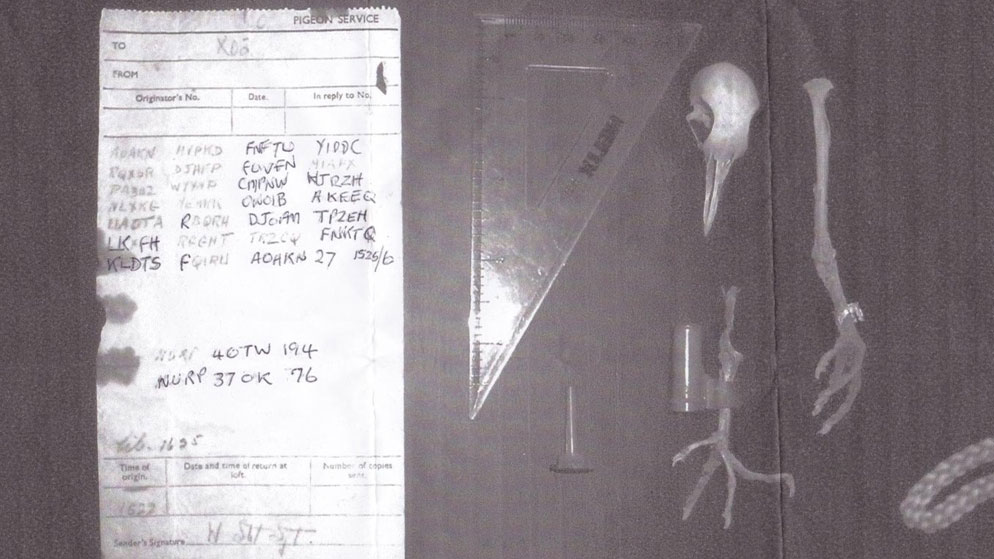
The code had been sent in a small red capsule attached to a carrier pigeon but the bird appears to have lost direction and become stuck in a chimney.
It was only discovered by David Martin who came across the pigeon’s skeleton while renovating his house in Bletchingley, Surrey.
Experts believe the bird was almost certainly sent from Nazi-occupied France on 6 June 1944 during the D-Day invasions.
However despite their best attempts officials at the government Communications Headquarters (GCHQ) in Cheltenham, Gloucester, have been unable to work out the meaning of the coded message.
The spelling of ‘Serjeant’ is thought to be significant, as the RAF used ‘j’ while the Army used ‘g’.
Now modern day code breakers have appealed for help from their predecessors who may have worked at Bletchley Park or elsewhere is military signals during the second world war.
Those who are still alive are in their nineties and older but it is hoped they may still be able to recognise the type of code and explain how it could be deciphered.
A GCHQ historian, identified only as Tony, said:” We know in other contexts that there are still quite a lot of people alive who worked in communication centres during the war.”
“It would be very interesting if people did have any information if they could put it in the pot and we could see if we can get any further with it.”
“The sort of codes that were constructed to be used during operations were designed only to be read by the senders and the recipients. Unless you get rather more idea than we have about who actually sent the message and who it was sent to we are not going to be able to find out what the underlying code was.”
The only part of the message that has been deciphered is that of its intended destination – that of Bomber Command, referred to as XO2, while the sender’s signature at the bottom of the message read Serjeant W Stot.
The spelling of “Serjeant” is thought to be significant, as the RAF used “j” while the Army used “g”.
It is thought the intended destination of the bird was Bletchley Park, Buckinghamsihre, a mere 80 miles from Mr Martin’s home, and the place where British and Polish code breakers deciphered the Enigma machine; their work shortening the war by as much as two years and saving countless lives.
However, the Royal Pigeon Racing Association believe the bird probably either got lost, disorientated in bad weather, or was simply exhausted after a long journey.
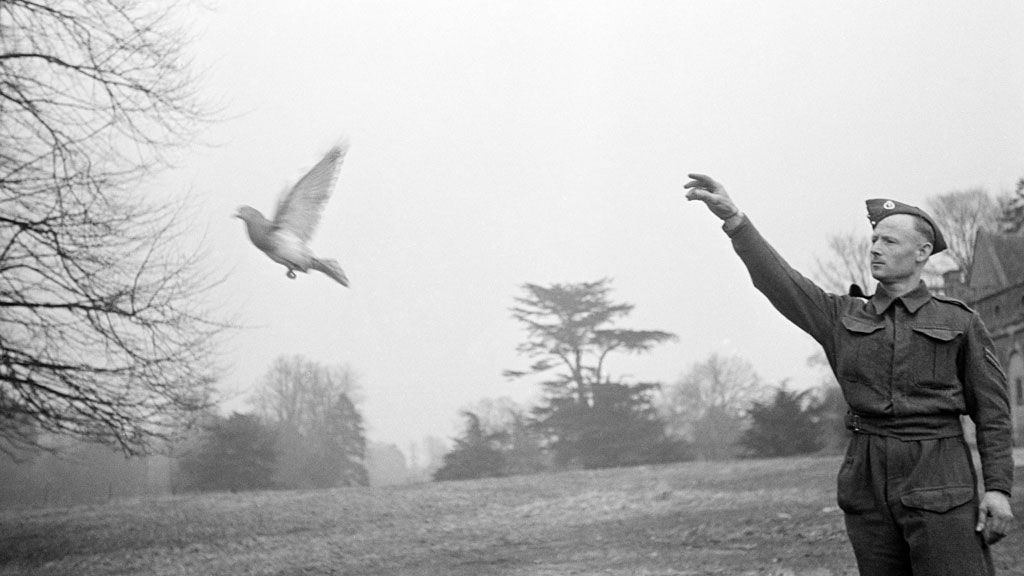
The use of carrier pigeons was a fairly common practice in the allied forces in order to communicate with troops on home ground after Winston Churchill imposed a radio blackout.
It is thought the dead pigeon was a member of the secret wing of the National Pigeon Service – which had a squadron of 250,000 birds during the second world war.
-
Latest news
-
FactCheck: the Angela Rayner house row explained

-
Police try to shut down right-wing event as Nigel Farage speaks3m
-
‘Many things Netanyahu has done I disagree with, but I’m not giving up on Israel’, says top-ranking Democrat4m
-
Could US House be about to vote on Israel, Ukraine aid bill?2m
-
Number of people out of work due to long-term sickness at record high3m
-


